
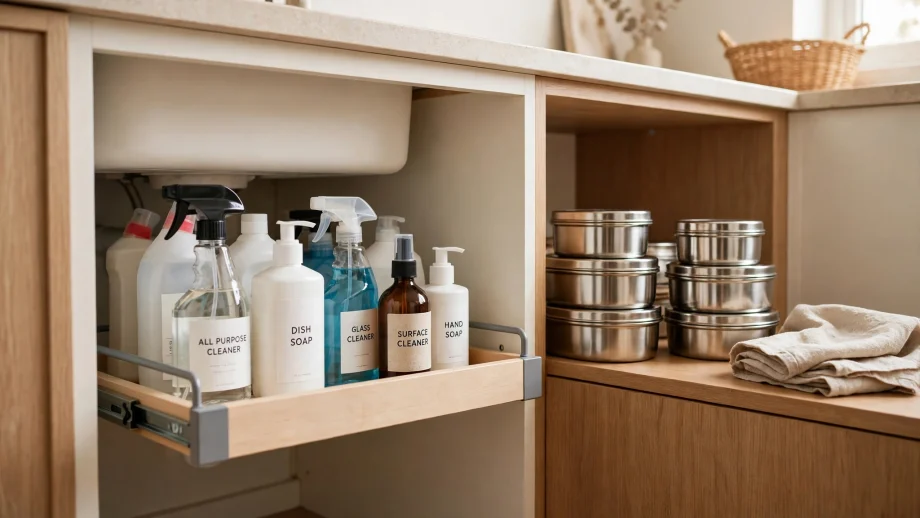
A small kitchen does not need more space. It needs better decisions. Most cluttered kitchens are not short of cupboards — they are full of things stored in the wrong place, in containers that do not stack, and in cupboards where the thing you need is always at the back. Fix the handful of spots that cause the most friction, and the whole room starts to feel bigger.
These ideas work in rented flats, older homes, and compact new builds alike. None of them require a renovation, and most of them take less than an afternoon.
1. Start with the cupboard under the sink
The cupboard under the sink is the most awkward space in any kitchen. Pipes eat up the middle, cleaning bottles fall over, and the sponge you need is always behind three half-empty bottles. It is also the cupboard people avoid organising, which is exactly why it causes the most daily annoyance.
The fix is simple: make everything slide out to you instead of forcing you to reach in. A pull-out organiser turns that dark, pipe-filled cupboard into a drawer you can actually use. Bottles stay upright, sponges and cloths get their own section, and nothing hides behind the trap. Measure the width of your cupboard and the space around the pipes before you buy — under-sink space varies a lot, and a few centimetres decide whether a tray glides or jams.
While you are there, throw out the bottles you have not touched in months. Most kitchens only need a multi-surface cleaner, a washing-up liquid, and a cloth or two. Everything else is just taking up the space you were complaining about.
Featured pick: Under-Sink Pull-Out Cabinet Organizer — $26.09. It slides out smoothly so cleaning bottles, sponges, and cloths stay reachable instead of lost behind the pipes.
2. Decant dry food into containers that actually stack
Half-open bags of rice, flour, pasta, and lentils are the second biggest source of kitchen chaos. They tear, they spill, they go stale, and they never stack neatly. Moving dry goods into matching airtight containers is the single change that makes a pantry look — and stay — organised.
A few rules make it work:
- Go uniform. One shape and one size family stacks properly; a random mix of jars does not.
- Label everything. Flour and icing sugar look identical at 7 a.m. A simple label saves mistakes.
- Buy for the shelf, not the shop. Measure your shelf height before ordering — tall containers in a short cupboard waste the whole point.
Stainless steel containers are a good choice here: they do not stain, they do not hold smells from last month’s curry, and they survive daily use far longer than thin plastic. Airtight lids keep flour fresh and keep pantry moths out, which matters more than most people realise until it happens to them.
Featured pick: Stainless Steel Airtight Food Storage Container — $7.33. A sturdy, airtight home for dry goods that stacks neatly and keeps contents fresh.
3. Zone your kitchen by how you actually cook
Professional kitchens run on zones, and small home kitchens benefit even more. Group things by task, not by type:
- Prep zone near the sink and chopping board: knives, boards, peelers, and mixing bowls.
- Cooking zone by the hob: oils, spices, spatulas, and pans.
- Serving zone near the plates and glasses: everyday crockery, cutlery, and mugs.
When each zone holds only what its task needs, you stop crossing the kitchen ten times per meal — and you stop finding the frying pan in three different cupboards. If something lives far from where you use it, move it. The test is simple: the thing you reach for should be within one step of where you use it.
4. Use the insides of doors and the ends of cabinets
The most wasted surfaces in a small kitchen are the ones you never look at: the inside of cupboard doors and the narrow ends of cabinets. A slim rack on the inside of a door holds spice jars, cling film, or cleaning sprays without taking a single centimetre of shelf. Hooks on a cabinet end hold measuring cups or a tea towel. These spots are free storage — they just need a small rack or a couple of adhesive hooks.
Keep it light, though. A door rack stuffed with heavy jars strains hinges. Small, light, frequently used items only.
5. Give everything a “one in, one out” rule
Organisation systems fail when new things keep arriving and nothing leaves. A small kitchen has a fixed capacity, so adopt a simple rule: every new gadget, mug, or container that comes in means one similar item goes out — donated, recycled, or binned. It takes ten seconds at the moment of arrival and prevents the slow creep that fills every organised system back up within months.
Do a five-minute audit once a month: open each cupboard and pull out anything you have not used in the last month. If it is seasonal, keep it. If you forgot you owned it, you do not need it.
6. Finish with something that makes the room feel good
Organisation is not only about function. A tidy kitchen that still feels cold will not stay tidy, because nobody enjoys spending time in it. Once the practical work is done, add one small finishing touch — a candle on the counter, a small plant on the windowsill, or a clean tea towel in a colour you like. It sounds trivial, but a room that feels pleasant gets looked after. A room that feels like a storage unit does not.
Featured pick: Brown Glass Cup Aromatherapy Candle — $4.49. A warm, gentle fragrance that makes a freshly organised kitchen feel finished.
Small changes, lasting difference
You do not need a bigger kitchen. You need the under-sink cupboard to work, containers that stack, zones that match how you cook, and a rule that stops clutter creeping back. Start with the cupboard under the sink — it is the worst spot in the room, and fixing it first makes every other change feel easier.
Frequently asked questions
What is the best first step for organising a small kitchen?
Start with the cupboard under the sink. It is the most awkward and most avoided space, so fixing it removes the biggest daily frustration and gives you a quick, visible win before you tackle the pantry.
Are airtight containers worth it for dry food?
Yes. They keep flour, rice, and pasta fresh longer, prevent spills from torn bags, keep out pantry moths, and — when you choose one uniform shape — stack neatly so shelves hold more.
How do I organise a kitchen with no pantry?
Use zones instead of a pantry: group items by cooking task near where you use them, use the insides of cupboard doors for slim items, and keep only daily-use items at eye level. Everything else goes higher up or in a less accessible cupboard.
How often should I declutter my kitchen?
A quick five-minute audit once a month is enough. Pull out anything unused in the last month, apply “one in, one out” to new arrivals, and the system largely looks after itself.